About This Course
Children and young people in Europe are spending more time indoors, more time in front of screens and less time in nature than any previous generation. At the same time, a growing body of research confirms what teachers have always sensed: direct experience in the natural world improves attention, reduces stress, supports physical health and deepens learning in ways that indoor instruction alone cannot replicate.
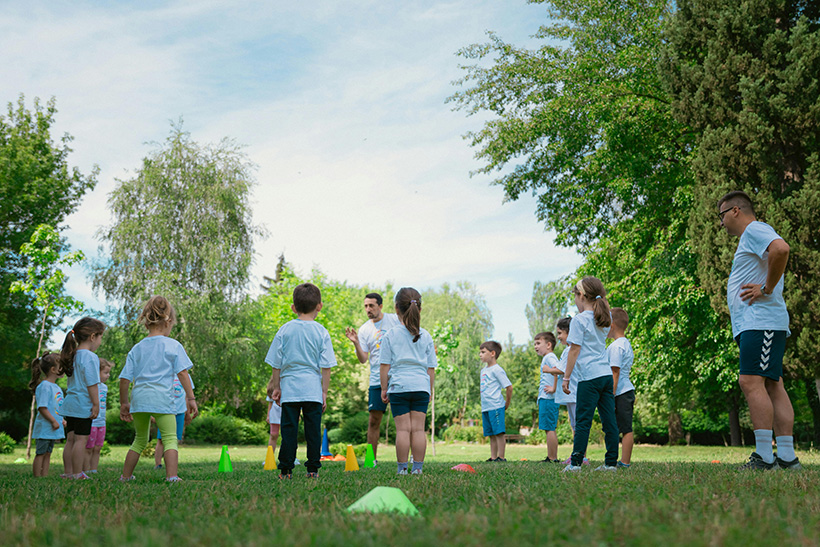
This course gives education professionals the theory, the practical skills and the inspiration to take learning outside. From forest school approaches and outdoor mathematics to environmental fieldwork and international outdoor education traditions, participants explore a rich range of outdoor and experiential learning methods and design activities that connect curriculum learning with direct experience in the natural world.
The course is particularly well suited to our destinations with outstanding natural environments, including Cappadocia, Antalya, Barcelona, Vienna and Hamburg, where participants can experience outdoor learning in genuinely spectacular settings. It connects to GreenComp, the EU sustainability competence framework, and the Erasmus+ priorities of Inclusion and Diversity and Environment and Fight Against Climate Change.
Who Should Attend
- Primary and secondary teachers who want to take learning outside more often and more effectively
- Science, geography and environmental education teachers
- Physical education teachers interested in expanding their outdoor pedagogy
- School leaders developing outdoor learning or eco-school strategies
- Early childhood educators interested in forest school and nature-based approaches
- No outdoor education qualifications required
Learning Outcomes
By the end of this course participants will be able to:
-
Explain the research evidence for outdoor and experiential learning and make the case for it within their school.
The research on outdoor learning is compelling and growing. You will know which studies matter, what they show and how to present the evidence to a headteacher or governing body that is cautious about safety or curriculum coverage concerns. The best argument for outdoor learning is not romantic but practical: it improves measurable outcomes.
-
Design outdoor learning activities linked to curriculum outcomes across different subject areas.
Outdoor learning is only as good as its connection to curriculum learning. You will be able to design outdoor activities that genuinely develop specific curriculum competences, not just fresh air and exercise. A primary teacher might take mathematics outside. A secondary biology teacher might redesign a fieldwork unit. A language teacher might use the environment as a stimulus for creative writing.
-
Apply risk-benefit assessment to outdoor learning activities to enable rather than prevent outdoor education.
Risk aversion is the most common barrier to outdoor learning in European schools. You will understand the difference between genuine safety management and risk aversion that prevents valuable learning, and be able to conduct a proportionate risk-benefit assessment that enables outdoor activities rather than shutting them down.
-
Use experiential learning principles to design activities that move beyond experience to genuine learning and reflection.
Experience alone does not produce learning. It is the reflection, the meaning-making and the application that transforms experience into genuine development. You will have a clear experiential learning cycle that you can apply to outdoor and non-outdoor contexts, and specific facilitation techniques for leading groups through it.
-
Connect outdoor and experiential learning to sustainability education, GreenComp and the EU environmental agenda.
Outdoor learning and environmental education are natural partners. You will know how to use time in nature as a starting point for genuine sustainability education that develops the values, the systems thinking and the action-orientation that GreenComp identifies as essential.
A 7-Day Professional Development Experience
The sudeNEXUS Learning programme combines five days of intensive professional training with a structured arrival day and a cultural excursion day. The outline below gives a general sense of the week. We are always open to tailoring the programme to your needs.
Participants arrive at their chosen destination and are welcomed by the sudeNEXUS local team. Check-in to accommodation, welcome pack distribution and an informal welcome dinner. A brief orientation walk introduces the city.
Guided cultural excursion to a key landmark of the destination. Participants travelling home are free to depart after breakfast.
This outline is a starting point, not a fixed schedule. Contact us to discuss how we can tailor this programme for your institution.
EU Policy Alignment
EU Priority Alignment
EU Competence Frameworks
EU Policy Initiatives
Available Locations and Dates
This course is available across all 15 sudeNEXUS Learning destinations. Check the dates page for current availability.
Check Dates and Availability